TL;DR: Trade schools like InterCoast Colleges offer hands-on training, shorter program durations, and significantly lower tuition costs compared to traditional four-year colleges. With strong employer demand for skilled trades graduates, flexible program formats, and high graduate satisfaction rates, trade school is an increasingly smart choice for students who want to enter the workforce quickly and with less debt.
Trade schools have gained significant popularity in recent years as more students seek alternatives to traditional four-year colleges. Offering a range of benefits — including hands-on training and shorter program durations — trade schools are becoming an increasingly attractive option for those eager to enter the workforce quickly and efficiently. This article explores the key features, advantages, and benefits of programs offered at InterCoast Colleges, highlighting why they are an excellent choice for many students in 2026 and beyond.
Features of InterCoast Colleges Programs
Hands-On Training
InterCoast Colleges offer rigorous hands-on training that provides practical experience and prepares students for real-world challenges. This approach aligns with national trends, as 84% of employers believe trade school graduates are better prepared for the workforce compared to college graduates. Students at InterCoast have access to fully equipped labs managed by industry professionals, ensuring they receive the best possible training.
In 2026, the emphasis on applied, job-ready skills has only intensified. Employers across industries from healthcare to skilled trades are increasingly prioritizing candidates who can demonstrate competency on day one — exactly what hands-on vocational training is designed to produce. As noted by Advanced Education, trade school graduates consistently start working earlier and with less debt than their four-year college counterparts, making the hands-on model not just educationally effective but financially strategic.
84% of employers believe that trade school graduates are more prepared for the workforce than college graduates.
Certificates & Degrees
Many programs at InterCoast Colleges provide certifications that allow students to enter the workforce more quickly than traditional four-year colleges. For instance, courses such as the Electrical Training Program, HVAC Technician, and Alcohol and Drug Counseling are designed to enable students to gain the skills needed for entry-level positions in less time. 70% of trade school graduates secure job offers before graduation, making trade schools an increasingly viable option for young adults.
This advantage is particularly relevant in 2026, as industries such as electrical work, HVAC, solar installation, and healthcare continue to face significant skilled labor shortages. Earning a focused certification in a high-demand field can fast-track a student's career in ways that a general four-year degree often cannot.
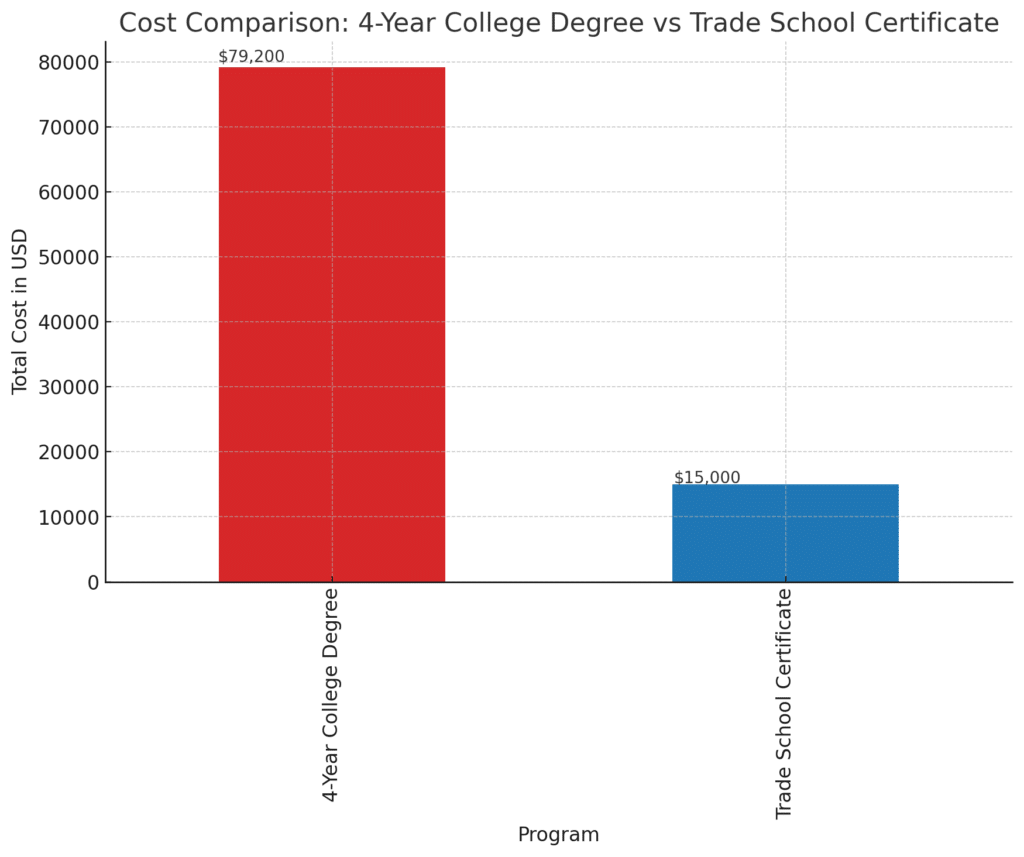
The average cost of trade school is significantly lower than that of a traditional four-year college.
Tuition Options
InterCoast Colleges offer tuition options, making education more accessible. The institution provides various payment plans and financial aid options to accommodate student needs if a student qualifies. On average, the cost of trade school ranges from $5,000 to $20,000, compared to the rising cost of four-year degrees, which has more than doubled in the 21st century (Digest of Education Statistics, NCES.ED.GOV).
The cost comparison is even more striking when you factor in opportunity cost. A trade school student who completes a program in under a year begins earning a salary while their four-year college peer is still accumulating tuition debt. According to a 2026 salary comparison analysis, electricians earn a median annual wage of $61,590 — actually exceeding the average bachelor's degree starting salary of $59,384. This salary data underscores that the return on investment (ROI) for trade school programs can be compelling, especially when weighed against significantly lower upfront costs.
Specialized Skill Set
Students at InterCoast Colleges may acquire specialized, market-ready skills tailored to specific industries. Some programs often combine online classes with hybrid formats, ensuring a comprehensive learning experience. This hands-on approach is crucial, as the demand for skilled trades is expected to grow by 4–5% through 2029, driven by the need for highly trained professionals in fields such as HVAC, solar installation, and electrical work.
In 2026, the clean energy sector in particular is driving surging demand for solar installation technicians and electricians trained in renewable systems. Students who complete InterCoast's Solar Installation or Electrical Training programs are well positioned to take advantage of this expanding job market. Similarly, the ongoing mental health and substance use crisis continues to fuel demand for trained behavioral health professionals — making programs like Alcohol and Drug Counseling Studies and Behavioral Health Assistant especially timely.
The Rise of Trade Schools Among Gen Z
The educational landscape has witnessed a remarkable transformation as trade schools and vocational programs emerge as viable alternatives for pursuing career success. Gen Z, known for their desire for practicality and innovation, is leading this shift. Departing from the conventional college path, many young workers are embracing skilled trades that may offer sustainability, the possibility of rapid career advancement, and potentially lucrative compensation.
The appeal of vocational training lies in its focus on hands-on experience and on-the-job training. These programs are designed to help students gain industry-specific skills, which may help bridge the gap between education and employment. In contrast to the escalating costs associated with four-year college degrees, vocational schools may provide a streamlined, cost-effective alternative, positioning students to potentially enter the workforce more quickly. This practical approach has resonated with a generation increasingly concerned with student debt and uncertain job prospects post-graduation.
By 2026, this trend has only accelerated. Dubbed the "toolbelt generation," many Gen Z individuals are actively choosing trades not as a fallback, but as a deliberate first choice. As reported by OPB, young adults are increasingly drawn to the trades for their stability, earning potential, and the satisfaction of tangible, skills-based work. Industry research in 2026 confirms that trade school graduates are entering the workforce earlier, carrying less debt, and reaching earning parity with — or exceeding — many four-year degree holders within just a few years of graduating.
This cultural and economic shift is reshaping how students, parents, and counselors think about higher education. Trade school is no longer seen as a lesser option — it is increasingly recognized as a smart, strategic path to a fulfilling and financially secure career.
Benefits of Choosing InterCoast Colleges
Career Flexibility
Students trained in vocational professions at InterCoast Colleges have the flexibility to pivot within their industry. Whether entering the electrical industry or advancing in Substance Use Counseling studies, InterCoast Colleges provide the education and support students need to succeed in various career paths. According to research, 95% of trade school graduates would recommend vocational education to a friend, highlighting their satisfaction with their career outcomes.
Faster Time to Employment
One of the most significant benefits of InterCoast Colleges programs is the speed with which graduates can enter the workforce. Most programs are designed to be completed in months rather than years, meaning students can begin building their careers — and their earnings — well ahead of traditional four-year college graduates. This faster time to employment also means students spend less time accruing student debt and more time building their professional experience.
Industry-Aligned Curriculum
InterCoast Colleges work to ensure that program curricula reflect current industry standards and employer expectations. This alignment means that graduates are trained on the tools, technologies, and practices actually used in their chosen fields today. Whether that's the latest HVAC diagnostic equipment, current electrical codes, or up-to-date substance use counseling methodologies, students can be confident their training is relevant and applicable the moment they step into the workplace.
Supportive Learning Environment
InterCoast Colleges are committed to student success at every stage of the educational journey. From enrollment through graduation and into job placement, students have access to advisors, instructors with real-world experience, and career support resources. This wraparound support system helps students stay on track and make informed decisions about their education and career goals.
Programs Offered at InterCoast Colleges
InterCoast Colleges provide a wide range of programs to equip students with the skills needed for various industries. These programs include:
- AAS Degree Business Administration (Online)
- AAS Degree Cyber Security (Online)
- AAS Degree Substance Use Disorder Counseling (Online)
- Alcohol and Drug Counseling Studies (Online)
- Behavioral Health Assistant (Online)
- Business Office Administration (Online)
- Cyber Security Specialist (Online)
- Electrical Training Program (Hybrid Program)
- HVAC Technician (Hybrid Program)
- Solar Installation (Hybrid Program)
- Medical Assistant (Hybrid Program)
- Pharmacy Technician (Hybrid Program)
These programs are designed to provide comprehensive training that combines theoretical knowledge with practical skills. Each program is built around the goal of preparing graduates for real, in-demand jobs — not just academic knowledge. The hybrid format used for programs like Electrical Training, HVAC Technician, Solar Installation, Medical Assistant, and Pharmacy Technician allows students to benefit from both the convenience of online coursework and the critical hands-on lab experience that employers value.
Trade School vs. College in 2026: What the Data Shows
The debate between trade school and a traditional four-year college has evolved considerably. In 2026, data increasingly supports the value of vocational education as a primary — not secondary — career pathway. Here's how the two paths compare on the metrics that matter most to students:
Cost: The average trade school program costs between $5,000 and $20,000, while the average four-year college degree has more than doubled in cost over the past two decades. When you factor in room, board, and living expenses, the total cost of a four-year degree can easily exceed $100,000 at many institutions.
Time to Employment: Trade school programs typically take anywhere from a few months to two years to complete. Four-year college programs, by definition, take at least four years — and many students take longer to graduate. This means trade school graduates can be earning a full-time income two to three years before their college counterparts even receive a diploma.
Salary: According to a 2026 salary analysis, electricians earn a median annual wage of $61,590, which actually exceeds the average bachelor's degree starting salary of $59,384. HVAC technicians, solar installers, medical assistants, and pharmacy technicians all command competitive wages in today's market.
Job Security: Skilled trades are notoriously difficult to outsource or automate. The physical, hands-on nature of work in fields like electrical, HVAC, and solar installation means that these jobs are inherently local and durable. In an era of increasing automation and offshore labor competition, trades offer a level of job security that many white-collar professions cannot guarantee.
Debt Load: The student debt crisis continues to be a defining issue for younger generations. Trade school graduates typically carry far less debt than four-year college graduates, allowing them to build financial security sooner and with greater confidence.
Frequently Asked Questions
What types of programs do InterCoast Colleges offer?
InterCoast Colleges offer a variety of programs in fields such as healthcare, business, and skilled trades. Programs include Electrical Training, HVAC Technician, Medical Assistant, Cybersecurity Specialist, Behavioral Health Assistant, and Alcohol & Drug Counseling Studies. Associate's degree programs are also available in Substance Use Disorder Counseling Studies (AAS), Business Administration (AAS), and Cyber Security (AAS). A detailed list of available career paths can be found on the InterCoast Colleges website.
How long does it take to complete a program at InterCoast Colleges?
Most programs at InterCoast Colleges last from a few months to two years. This allows students to enter the workforce quickly and gain real-world experience sooner than students enrolled in traditional four-year programs. The shorter duration also means less time spent in school and less money spent on tuition overall.
Are there financial aid options available at InterCoast Colleges?
InterCoast Colleges does not offer scholarships directly. However, various external financial assistance opportunities are available to qualifying students, which may include federal financial aid programs, state grants, and private scholarships. Students are encouraged to speak with an admissions advisor about which options may be available to them based on their individual circumstances.
Is trade school a good choice in 2026?
Absolutely. In 2026, trade school is widely recognized as one of the smartest educational investments a student can make. With lower costs, shorter time to completion, strong employer demand, and competitive salaries — especially in fields like electrical work, HVAC, and solar installation — trade school offers an excellent return on investment. The rise of the "toolbelt generation" among Gen Z further reflects a cultural shift toward valuing practical, skills-based education.
What is the job outlook for skilled trades graduates?
The demand for skilled trades professionals continues to grow. Fields such as HVAC, solar installation, and electrical work are projected to see sustained job growth driven by infrastructure investment, the clean energy transition, and ongoing retirements among experienced tradespeople. Healthcare roles like Medical Assistant and Pharmacy Technician are similarly in high demand due to an aging population and expanding healthcare access. Graduates who enter these fields with focused, hands-on training are well positioned for long-term career success.
How does InterCoast Colleges prepare students for the workforce?
InterCoast Colleges prepares students through a combination of industry-aligned curriculum, hands-on lab training, experienced instructors with real-world backgrounds, and career support services. The goal is to ensure that every graduate is ready to meet employer expectations from day one. Programs are regularly reviewed to ensure they reflect current industry standards and best practices.
Can I study online at InterCoast Colleges?
Yes. Many of InterCoast's programs are offered fully online, including the AAS Degree programs in Business Administration, Cyber Security, and Substance Use Disorder Counseling, as well as Alcohol and Drug Counseling Studies, Behavioral Health Assistant, Business Office Administration, and Cyber Security Specialist. Trades programs such as Electrical Training, HVAC Technician, Solar Installation, Medical Assistant, and Pharmacy Technician are offered in a hybrid format that combines online coursework with required hands-on lab sessions.
References:
- National Student Clearinghouse Research Center
- Digest of Education Statistics — NCES.ED.GOV
- Trade School vs College in 2026: Salary Comparison, Job Outlook & ROI — MajorMatch
- Trade School Benefits: Why Gen Z Chooses Trades Over College — Advanced Education
- Many in Gen Z ditch colleges for trade schools. Meet the 'toolbelt generation' — OPB
- Philadelphia Trade School in 2026: Start a High-Paying Career Without Going to College — PTT